

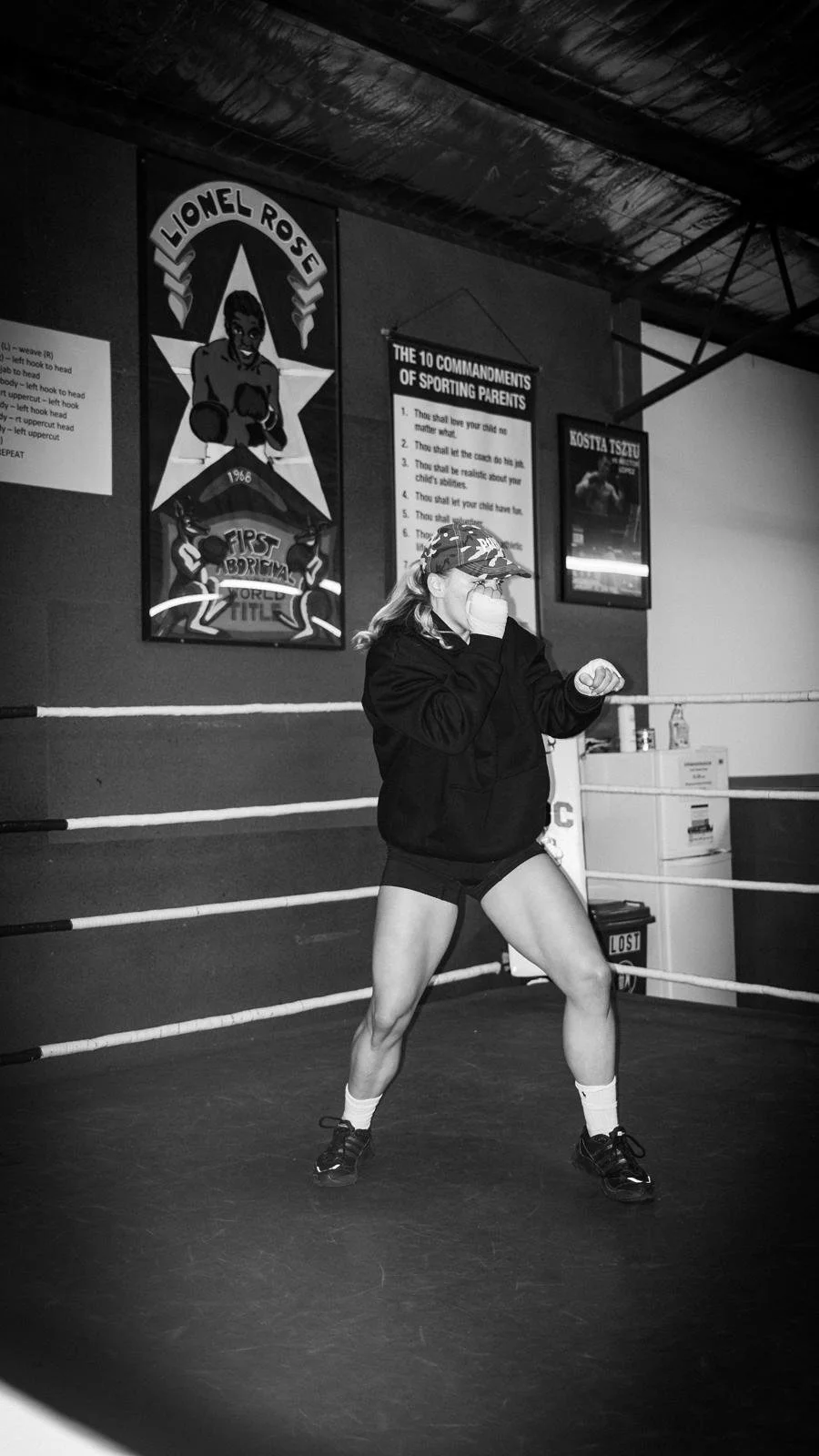
The Centre for Ending Harm in Sport was founded by Marissa Williamson Pohlman, a proud queer Blak woman, Olympic boxer, and someone who knows firsthand what it costs to speak up in an institution that isn't built to listen.
Marissa represented Australia at the Paris 2024 Olympic Games. She's also spent the past year in a formal dispute with Boxing Australia, watching how slowly systems move when the person raising the alarm is the athlete, not the institution. That experience didn't just show her the gaps. It showed her how many people fall into them, and how few come out the other side with their case taken seriously, let alone their career or their safety intact.
CEHS exists because athlete safety shouldn't depend on who's willing to fight for it alone. It's built on the belief that an environment that isn't safe for adults can't be safe for children either, and that silence protects the wrong people. The work ahead is fighting for enforceable athlete welfare standards, enshrined in law, and real accountability from the federations and institutions that have gone without it for too long.
This is a centre built from lived experience, not theory. It's still taking shape, and that's the point. The story isn't finished. Right now, it's about building something that should have existed already.
Changing Laws.
Raising Standards.
Giving athletes a voice.
Changing Laws. Raising Standards. Giving athletes a voice.
To create harm free sporting environments where every athlete and their loved ones are safe, respected and able to thive.
Purpose
What we are fighting for
-
A dedicated Act is the only way to make safeguarding in sport enforceable rather than voluntary. We recommend it establish:
An independent reporting and investigation mechanism with the power to investigate sporting organisations directly, bypassing the federation a complaint is against
A national register tracking abuse and misconduct patterns across sports, so a person or a pattern of failure cannot move between organisations unseen
-
The scale and repetition of failures across gymnastics, swimming, athletics and boxing point to a systemic problem, not a series of isolated incidents. We call for a formal Royal Commission, with the power to compel evidence and examine both individual conduct and organisational failure across the sporting system.
-
Reform has to outlast any single campaign or news cycle. We recommend two standing mechanisms:
An annual State of Athlete Safety report card, publicly grading national sporting federations on safeguarding performance
A peer support network for survivors, giving people who have been through the system structured support from others with lived experience
For media enquiries and partnership opportunities